15+ years of operations and general management leadership. I improve how businesses run by combining team leadership, process improvement, automation, data, and practical systems. Lean Six Sigma Black Belt, currently leading a 26-person team and a company-wide systems transformation at an approximately 200-employee manufacturer.
The department was spending too much on employee hours, delayed projects, outsourced production, and vendor pricing that had not been regularly compared against the market.
Redesigned project workflows, reduced unnecessary labor hours, renegotiated supplier pricing, added a second vendor to create competition, and purchased equipment that allowed medium-volume work to be completed internally.
Reduced department operating expenses by approximately 35% over one year, while improving turnaround and reducing dependence on a single supplier.
Product and project information was spread across departments, and work could slow down because the history, decisions, testing, ownership, and next steps were not always easy to follow.
Built a structured workflow using Notion and Wrike. Notion became the long-term record for product and project development, from early ideas and testing through approvals, changes, or cancellation. Wrike was used to manage active tasks, ownership, deadlines, and follow-up.
Reduced average project completion time by approximately 30%. Projects that previously took around three months were often completed in about two, while overdue work and delivery performance also improved.
Pricing, ERP data, website information, and more than 5,000 technical specification sheets were maintained across separate systems and manual processes, creating duplicated work, slower updates, inconsistent information, and avoidable errors.
I am leading implementation of a roughly $200K PIM system that will automate a large amount of product-data entry, specification-sheet production, updating, checking, and publishing, connecting pricing, M3 ERP data, the website, and 5,000+ spec sheets across close to a million SKUs into one controlled source of truth.
Projected to cut production time by an estimated 35%, improve data accuracy, reduce rework, lower ongoing labor requirements, and generate projected annual savings of $150K to $200K.
I look for delays, duplicated work, unnecessary cost, and process gaps, then build practical systems that make the work faster, clearer, and more consistent.
I use dashboards, project data, cost information, and operational metrics to identify problems, track progress, and support better decisions.
I understand how operational decisions affect profitability. I control costs, negotiate better terms, improve productivity, and invest where there is a clear return.
I set clear priorities, delegate to people's strengths, remove obstacles, and coordinate across departments so projects do not stall.
I identify repetitive, manual, and error-prone work, then build practical systems and automation that reduce effort, improve accuracy, and give teams more time for higher-value work.
I have spent my career looking at how a business works as a whole.
I started in commercial printing, where I learned early that every decision connects to another, pricing to production, production to delivery, delivery to the customer. For 14 years I managed nearly every part of that operation, and it taught me how a business really fits together.
That shaped how I lead today. I look at how work flows across a company and build practical systems that make it clearer, faster, and easier to manage. I do not add tools to look advanced; I build what actually helps the team do better work.
At Elite Lighting I have worked across operations, purchasing, engineering, marketing, design, and company-wide projects, which lets me connect departments that do not always speak the same language.
Automation is becoming a larger part of how I approach operations. I look for repetitive work, duplicated entry, manual handoffs, and systems that do not communicate with each other. My goal is not to automate for the sake of technology. It is to remove unnecessary work, improve accuracy, reduce cost, and make the operation easier to scale.
What I enjoy most is the work that sits between teams, the parts no single group owns. My style is direct, supportive, and practical: I set clear priorities, give people ownership, and stay close enough to remove obstacles. I am now looking for a senior operations or general management role where I can take broad responsibility, lead strong teams, and help a company perform at its best.
Connect on LinkedInManagement & Strategy Institute
Senior operations, operational excellence, business operations, automation, and general management roles in a growing mid-sized, PE-backed, or established enterprise business with real operational complexity.
I am open to strong senior manager, director, head-of-function, VP, and general management opportunities with broad cross-functional responsibility, meaningful budget ownership, and the authority to improve systems, automate manual work, develop teams, control cost, and improve overall performance, ideally with P&L responsibility or a clear path to it.
If you are hiring for a strong senior operations, Director, VP, General Manager, Head of Operations, Operational Excellence, Business Operations, Automation, or Continuous Improvement role, I would welcome a conversation.
Every two weeks I write about where operations, engineering, and marketing actually meet. Short, practical field notes on cutting cost, building systems, and running the day to day.

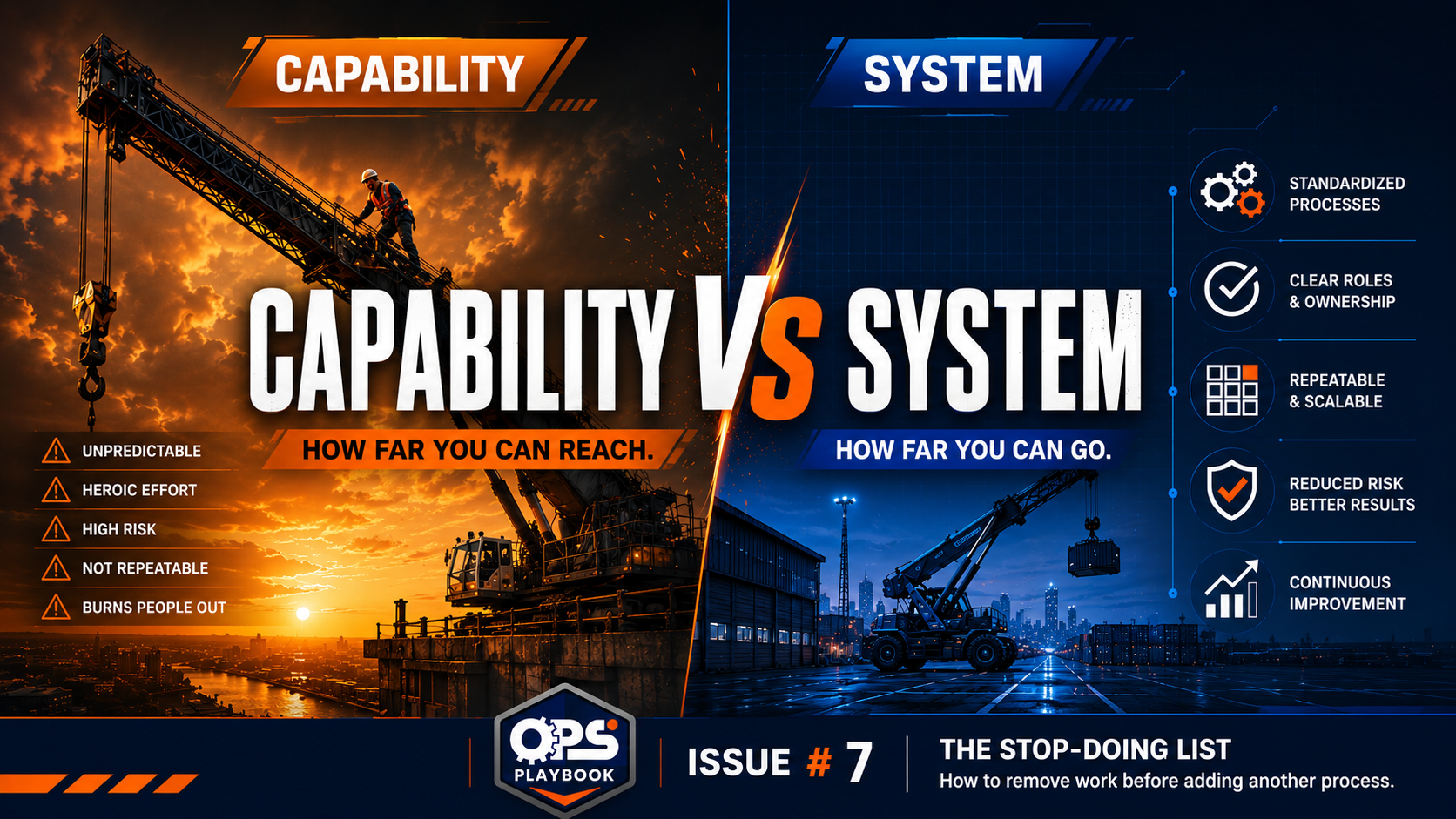
The difference between a capability that works once and a system that works every time, with whoever is on shift.
Read issue →
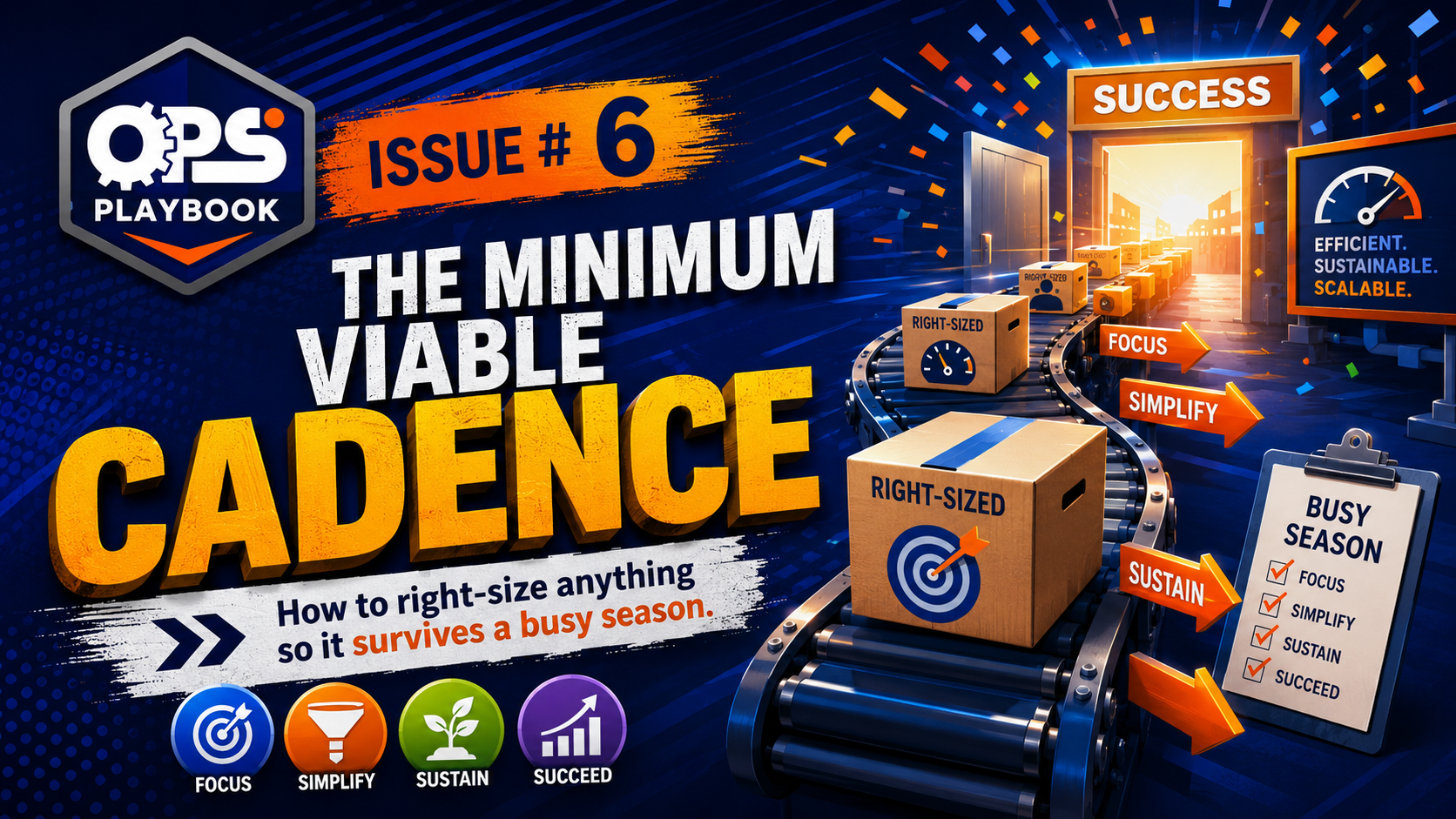
Right-size any commitment to the floor you can hold on your worst week, and the streak survives a busy season.
Read issue →
Three controls, a cadence, and clear triggers so an improvement does not quietly fade back to how it was.
Read issue →I regularly share practical ideas on operational excellence, manufacturing, leadership, automation, systems, technology, and continuous improvement.