Two people worked on the same thing, not as a collaboration. As a collision.
Ops updated the tracker and moved the date. Sales messaged the customer with a confident "we're on it." IT started a change based on an old request thread. Nobody was being careless. Everyone was trying to help.
The problem was simpler and more expensive: ownership was never defined, so everyone filled the gap in their own way. By the time the team compared notes, the work was duplicated, the customer was confused, and someone had to clean up a mess that did not need to exist.
That is what unclear ownership creates:
- Not laziness.
- Not incompetence.
- Just friction.
And the fastest fix is not another meeting. It is a 10-minute ownership map.
The idea
Most teams do not need a new process. They need clear ownership at each step. You can create that clarity using either:
- RACI: Responsible, Accountable, Consulted, Informed.
- DRI: Directly Responsible Individual (one clear owner).
If you only remember one thing: every step gets exactly one Accountable owner.
The 10-minute playbook
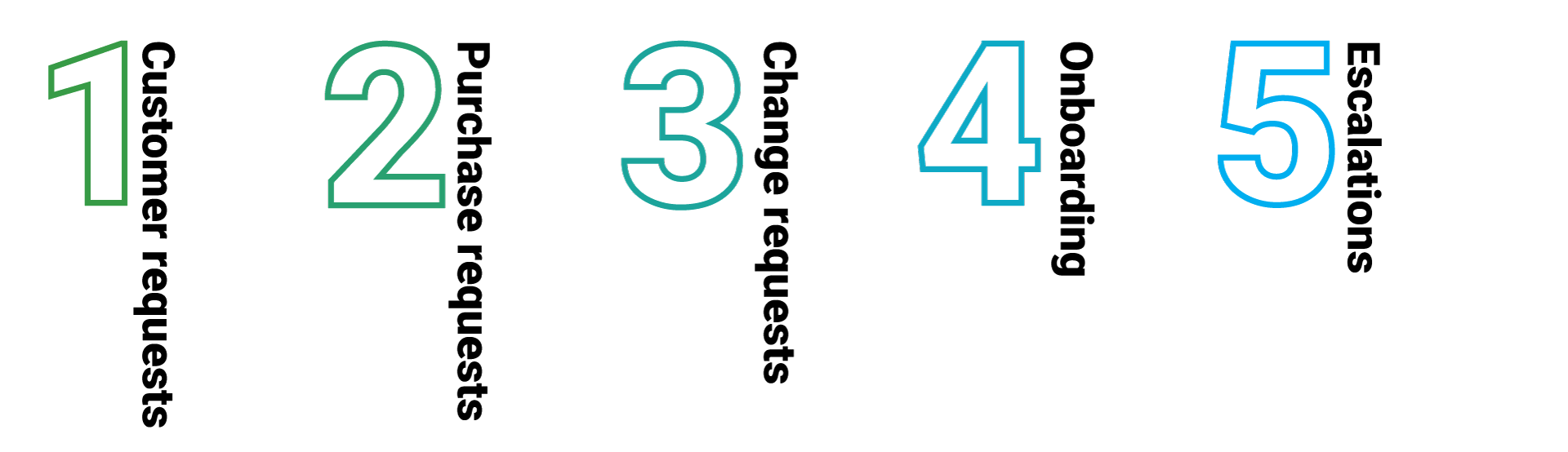
Pick one workflow that creates confusion. Keep it real and specific:
- Customer requests
- Purchase requests
- Change requests
- Onboarding
- Escalations
The five steps
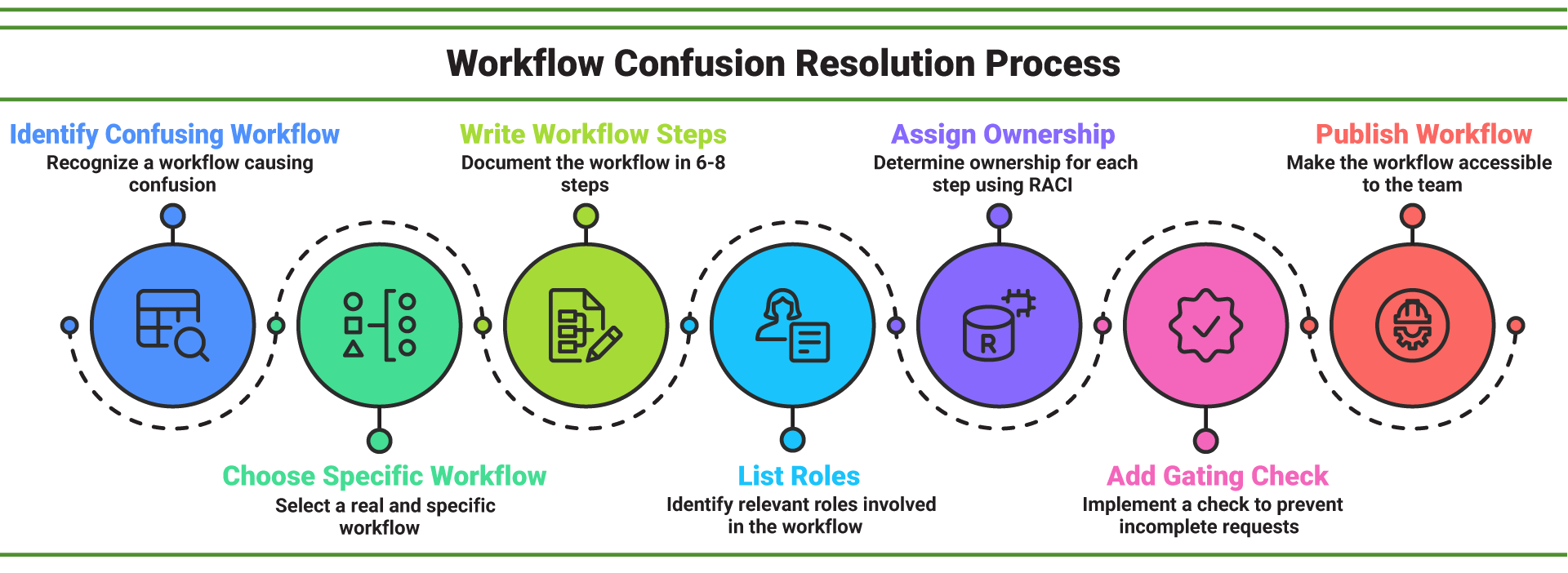
Step 1: Write the workflow in 6 to 8 steps (2 minutes)
Example steps: intake, validate, prioritize, execute, QA, close.
Step 2: List roles, not names (1 minute)
Ops, Sales, Finance, IT, Warehouse, Engineering, Customer Success.
Step 3: Assign ownership per step (4 minutes)
Use RACI, but keep it strict:
- One A per step, always.
- One or more R is fine.
- Use C only when input is required to proceed.
- Use I when someone needs visibility, not permission.
Step 4: Add one gating check before work starts (2 minutes)
This prevents half-baked requests from entering the system.
Step 5: Publish it where work happens (1 minute)
Not in a hidden doc. Put it in the intake form, pinned Slack message, or your Notion page.
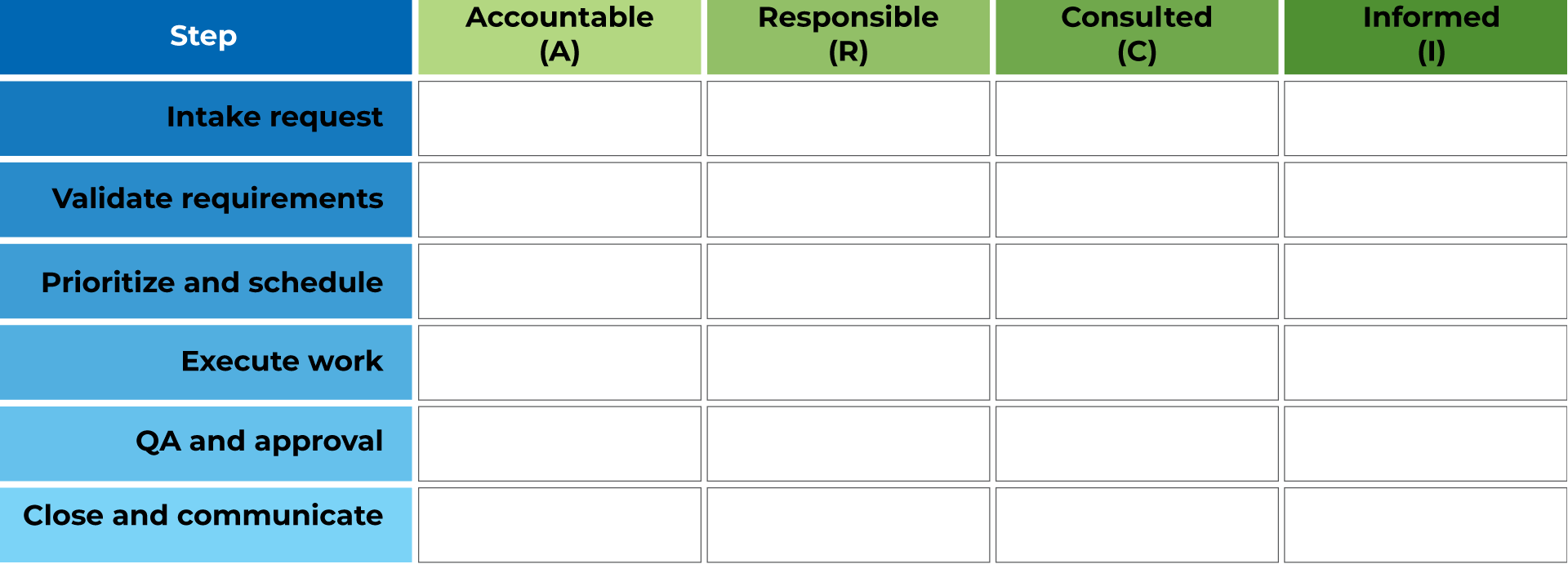
Copy-paste template: Mini RACI
Replace the steps and roles, and you are done.
Ownership rules that make it work
- One A per step. No exceptions.
- A owns the outcome. R does the work.
- If two people are A, nobody is A.
- C is for required input, not politeness.
- If a step stalls, escalate to the A, not the loudest person.
The gating check
This one line prevents chaos:
We do not start work until the request includes goal, owner, priority, deadline, and required inputs. If it is not ready, it does not enter the queue.
Why this works
Unclear ownership creates two outcomes:
- Work stalls because everyone assumes someone else is handling it.
- Work duplicates because multiple people try to rescue it.
A simple ownership map stops both. It makes the handoff obvious, reduces escalation, and protects focus.
Add clarity, not another meeting
If your team keeps tripping over handoffs, do not add another meeting. Add clarity: one workflow, one accountable owner per step, one gating check, published where the work happens.
Lior Zaken
Operational Excellence & Continuous Improvement